ARTICLE

For a long time, the design process followed a fairly predictable path - You started with a sketch, moved to wireframes, created a mockup and then built a prototype. Most of this happened inside one design tool, probably Figma, Sketch or Adobe XD.
The final mockup showed what the product was supposed to look like. The prototype showed how some of it was supposed to work.
This process worked well, but it also had limitations. Creating a proper prototype took time, especially when the design involved complex interactions, animations or multiple user flows. The animation tools inside design software were useful, but they could only take you so far. (Although, it is improving a lot over the past few weeks)
But what if the experience required something more? What if I wanted to show how a real website would behave while scrolling, how a component would react to different actions, or how an entire product would feel when all the pieces were connected?

The mockup was never the whole design
A static mockup is useful. It helps people understand the visual direction, layout, typography and overall structure. But a mockup cannot always communicate the experience.
I have been in some situations where I simply showed the static design to the stakeholders. I had to explain what would happen when someone clicked a button, how one section would move into another, what would happen after a user completed an action and why a particular interaction was designed that way.
Check this design of a website that I had created a couple of years ago. It looks liḱe a bunch of random square boxes. What are they? Why are they placed like that?
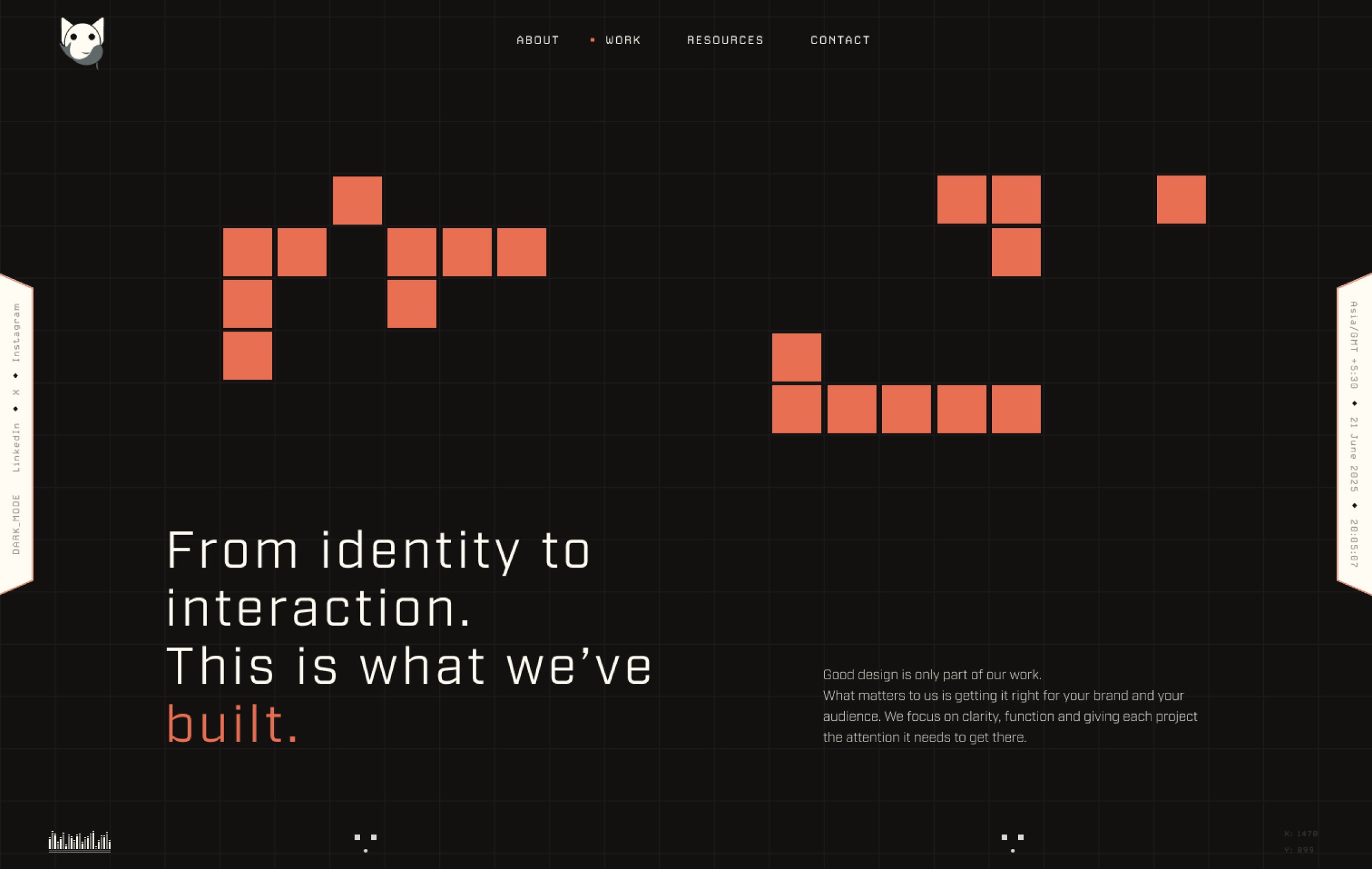
Presenting a mockup creates information gap between the designer and the stakeholder. They might see a large empty area and think something is missing. They might not understand why an element is placed in a particular position. They might assume that a section is static when it is actually meant to respond to scrolling or user input. And this leads to lots of unnecessary iterations. The stakeholder does not fully understand the vision, the designer assumes the design is self-explanatory.
In situations like this, a working work type helps close the gap.
Prototyping has been changing for a while
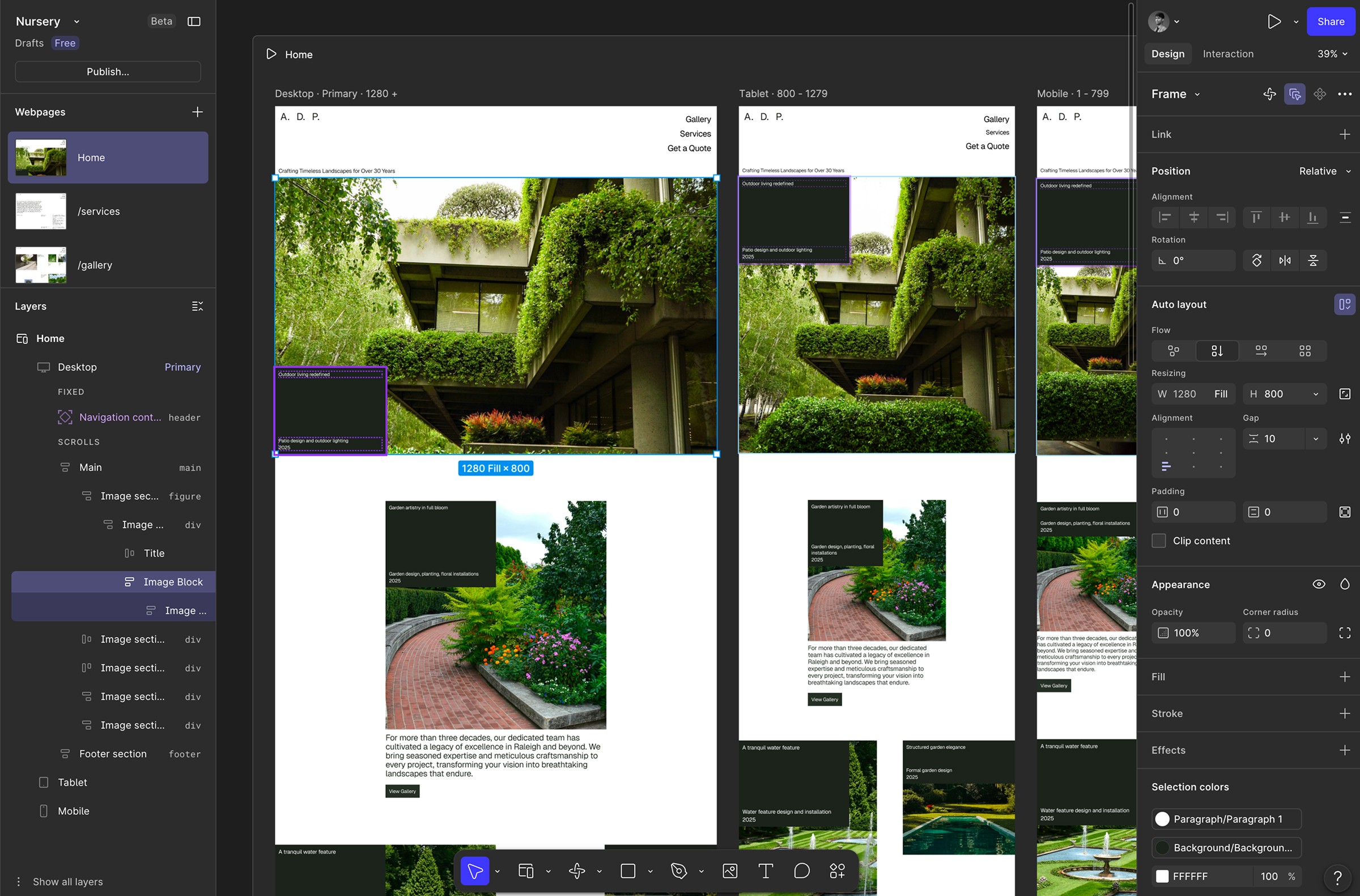
AI has made it much easier to move from a visual idea to something that can actually be experienced. A few years ago, the usual approach involved building a separate prototype. Now, not just a designer but anyone can create the mockup and ask an AI tool to turn it into an interactive website almost immediately.
I want to reiterate on that - anyone can build an interactive website; however, a designer knows why we are building a website or a design of a product one way and not the other.
This started becoming more visible with tools such as Figma Make and Figma Sites. When it first launched, people mostly used these features to prototype individual buttons, small sections or simple interactions. But the capabilities kept improving. It is now possible to create an entire website or product experience directly from the design context.
The boundary between a design file and a working prototype started becoming less obvious.
We now have tools that can understand Figma files through MCP, tools that can create or edit designs, Cursor has its own web design features and point-and-click edits, ChatGPT has Sites. Figma also announced Figma Agents. There are many more different tools, but the important part of all these is that the distance between a mockup and an interactive prototype is getting smaller.
It has almost come to a point where as a designer, you are kind of expected to show our working prototype as the first draft.
Showing how the design actually works
Instead of showing a static image and explaining what will happen later, use AI to show something much closer to the final experience. This way a stakeholder can click through the flow, scroll through the page, open the menu, see the animation and understand the relationship between different sections.
It does not need to be production-ready code. It does not need to have every backend function working. It just needs to communicate the experience clearly. That is already a huge improvement. When people can interact with something, the conversation changes. They no longer have to imagine how the design might work. They can react to the actual flow.
A prototype also helps the designer. Some ideas look great as static layouts but feel awkward when they move. A transition might seem impressive until it is repeated three or four times. A layout that looks balanced in a mockup might become confusing when the user has to navigate through it. Interaction exposes those problems at a much early stage.
This is not only happening in design
Yes, the use of AI to create interactive experiences is not just limited to design. We're seeing this in data analysis as well.
For a long time, data was usually presented as static numbers, tables and charts. That is still useful, especially when someone needs to check exact values. But, let's be honest, it is boring to look at huge charts with just numbers.
Tools like Flourish already make it possible to upload a CSV file to create interactive charts. Now AI tools can go even further. Instead of creating only one chart, they can generate an entire presentation or website around the data.
The data becomes something you explore rather than something you simply read. That can make the experience easier to understand and more enjoyable.
Is the static design file becoming less important?
Maybe? I don't know. But many still start with a static design instead of jumping straight to prompting (cough cough… tokens..). But it may no longer be enough as the final design deliverable.
A designer is not becoming less important due to AI being able to create prototypes directly with just prompts. If anything, it makes understanding the problem even more important.
You still need to know what you are designing, who it is for, what the interaction is trying to achieve and when an animation is helping instead of becoming a distraction. AI can help create the experience, but it cannot replace the thinking behind it (At least, for now).
We are designing the behavior, the flow and the way people experience information, not just creating images anymore. And that is probably where design is heading next. And for this, I believe, knowing the entire design and development process's why's and how's is more important than ever.